

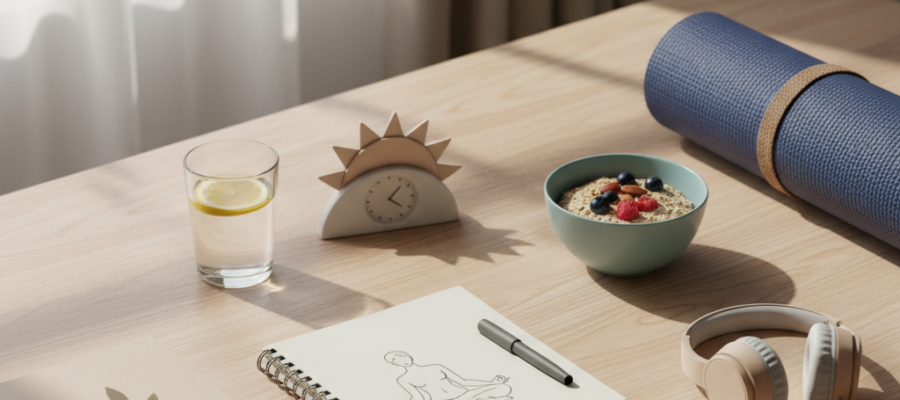
Have you ever woken up feeling like you’re late even though your alarm went off just a few minutes ago? Chaotic mornings, when you’re rushing to find your keys, drinking an iced coffee and already planning a stressful agenda in your mind, are a common occurrence in today’s world. But have you noticed that days that start with calm and planning tend to be much more productive and emotionally stable? A morning routine isn’t just a buzzword used by productivity gurus; it is a powerful psychological and physiological tool that allows you to regain control of your time. Correctly formed habits help not only reduce stress, but also program the brain for success even before starting the first work task. In this article, we’ll discuss in detail how to create a personal morning routine that works for you, regardless of whether you’re a «wimp» or an «owl.»
Why is it important to have a structured start to the morning?
Many people think that routine is a limitation of freedom, but psychologists say the opposite: structure gives freedom. The main reason why morning routines work is related to a concept called decision fatigue (English decision fatigue). Every morning our willpower is at its peak, but with every decision we make (what to wear, what to eat, when to go out) these resources are depleted.
If you go on autopilot in the morning, you’ll save your mental energy for the more important challenges of the day. Additionally, predictability reduces anxiety. When you know exactly what to expect within the first hour of waking up, your brain no longer releases the stress hormone cortisol, making you feel calmer and more focused.
Preparation does not begin in the morning, but in the evening
One of the biggest mistakes beginners make is trying to replace the morning while ignoring the evening. A quality morning is a direct consequence of the quality of sleep and preparation in the evening. If you go to bed late and unprepared, no amount of morning routine will save you from fatigue.
- Log out of the screens: The blue light emitted by phones and computers inhibits the production of melatonin. Try not to use electronic devices at least an hour before going to bed.
- Prepare the environment: Prepare the clothes you will wear the night before and, if you play sports, put your sports clothes in a visible place. It removes the friction between desire and action.
- Write down your goals for tomorrow: Before going to bed, write down 1 to 3 most important tasks for the next day. This will help clear your mind and allow you to sleep more peacefully knowing that the plan is already in place.
First steps to awakening: the importance of physiology
The first 15-30 minutes after waking up are crucial. Your body is still transitioning from sleep to wakefulness, so it’s important to wake it up properly. Here are some essentials to incorporate into your routine:
Hydration is the basis of energy
After 7-8 hours of sleep, your body is naturally dehydrated. Many people make the mistake of immediately reaching for a cup of coffee. Caffeine is a diuretic, so it can further dehydrate the body. Your first drink should be a glass of water (room temperature or warm). It activates the metabolism, helps eliminate toxins and provides the brain with the oxygen it needs.
Light and the biological clock
Our circadian rhythm (biological clock) is mainly regulated by light. Try to enjoy natural light as soon as possible after waking up. Close the curtains or, if possible, go outside for at least a few minutes. The light sends a signal to the brain to stop producing melatonin and increase alertness naturally.
Activate your body and mind
A successful routine should include not only physiological needs, but also psychological disposition. This doesn’t mean you have to meditate for an hour or run a marathon. Consistency and awareness are key.
- Movement: It can be a 10 minute light exercise, yoga or simply stretching exercises. Physical activity in the morning improves blood circulation and releases endorphins, which naturally lift your mood.
- Awareness: Take at least 5 minutes of silence. It can be meditation, breathing exercises, or just a quiet cup of coffee without a phone in your hand. This helps reduce reactivity: you will start the day without reacting to stimuli, but having control of the situation.
- Write or read a blog: Many successful people dedicate their mornings to personal development. A few pages of a motivating book or writing down your thoughts (gratitude journal) can put you in a positive mood for the entire day.
Breakfast: fuel or burden?
Nutrition is an individual matter, but your morning routine would be incomplete without discussing it. There are two main camps: those who eat a full breakfast and those who practice intermittent fasting. Regardless of your choice, it’s important to avoid sugar spikes.
If you have breakfast, choose proteins and good fats (eggs, avocado, nuts, yogurt) instead of fast carbohydrates (sandwiches, sweet cereals). Protein foods guarantee uniform energy levels and prevent sudden drops in energy and hunger pangs at midday.
How do you form a habit that lasts?
One of the biggest problems people face is too much enthusiasm in the beginning and rapid «burnout». If you’ve never had a morning routine, trying to get up at 5 a.m., exercise for an hour, and meditate for 30 minutes will likely fail after three days.
Small steps methodology
Start with one simple step. For example, commit to drinking only one glass of water and making your bed in the morning. Once it becomes an automatic habit (usually after 2-3 weeks), add another element, such as 5 minutes of exercise. This way the routine grows organically and doesn’t cause much resistance.
Habit stacking
This is a highly effective technique described in the book Atomic Habits by James Clear. The point is simple: «attach» a new habit to the existing one. The formula is as follows: “Then, Kai [esamas įprotis]I [naujas įprotis].”
For example:
- “After I brush my teeth, I’ll drink a glass of water.”
- «After drinking coffee, I will read a book for 5 minutes.»
The most common mistakes that ruin your morning success
Even with the best intentions it is easy to make mistakes. Pay attention to these «routine killers»:
- Pressing the «Snooze» button: It’s the worst way to start the day. When you fall back asleep for 10 minutes, you begin a new sleep cycle that you cannot complete. This makes you wake up even more tired (this is called sleep inertia).
- Check social networks in bed: It lets extraneous problems, news, and stresses into your brain before you even wake up. You become reactive instead of proactive.
- Rigidity: Life is unpredictable. If you overslept or your child got sick, you don’t have to completely abandon your routine. Have a “minimal release” (e.g. just water and 2 minutes of breathing) to maintain continuity.
Frequently Asked Questions (FAQ)
How long should your morning routine last?
There is no single right answer. A morning routine can last anywhere from 10 minutes to 2 hours. It all depends on your lifestyle and your commitments. The most important thing is not durability, but quality and consistency. Even a 15-minute mindful start is better than a chaotic run.
What if I’m not a «morning person»?
You don’t need to wake up at 5 in the morning to have a successful routine. If your biological rhythm requires you to get up later, adapt your routine to your time. It’s not what time you get up that matters, but what you do when you get up. It is true that it is important to ensure a sufficient amount of sleep, so if you get up later, you also need to go to bed later, but maintain regularity.
Do you need to follow a routine on weekends?
Strict discipline isn’t necessary on weekends, but a complete change of pace (so-called «social jet lag») can affect how you feel on Monday. It is recommended to wake up and go to bed at the same time on weekends (no more than 1 hour difference), but the routine itself can be lightened by indulging in a slower breakfast or spending more time in bed with a book.
How can I balance my routine if I have young children?
This is one of the biggest challenges. The best strategy is to get up at least 15-30 minutes before the kids. This will be your «sacred moment». If this isn’t possible, try involving children in some elements (such as joint exercise or preparing breakfast) or shift some personal time into the child’s afternoon nap.
Maintain long-term motivation and discipline
Finally, it’s important to understand that motivation is a temporary emotion and discipline is a muscle that needs to be trained. There will be mornings when you want to drop everything and lie in bed. That’s when the true value of a routine comes in: It acts as a safety net to keep you from completely derailing on tough days. Don’t look for perfection; seek progress.
If you miss a day, don’t worry. It doesn’t erase all your results. Get back to your routine the next morning. In the long run you will see that the morning routine will no longer become an obligation, but the most precious part of the day, during which you will invest in your most important project: yourself.
Latest Posts Published

Head massage: 5 unsuspected benefits

How to overcome anxiety and gain self-confidence

What does sophrology treat? | Discover its advantages and how it can help you?

Acupressure: Acupuncture without needles

Managing negative emotions in 6 steps

How to monitor your sleep quality: apps and devices

8 sophrology exercises to overcome stress

Foot reflexology in Castelginest: relaxation near Toulouse

Positive Attitude: 7 Key Steps to Reduce Stres