Welcome to Réflex’Attitude in Castelginestwhere I invite you to discover a unique treatment that combines tradition and well-being: Japanese massage. Fascinating and deeply relaxing, this type of massage is much more than a simple moment of relaxation. It has its roots in an ancient philosophy in which body, mind and energy are one.
Make an appointment at the relaxation office located in Castelginest for your Japanese massage session.
The origins of Japanese massage
Japanese massage, often associated with shiatsudraws inspiration from Chinese practices and adapted to 6th century Japanese culture. Originally these techniques aimed to rebalance vital energies (the famous TObut we’ll be back). Over the centuries, Japanese massage has evolved, incorporating Buddhist and Taoist influences, to become a recognized therapeutic method.
What strikes me about this tradition is its simple and body-respectful approach. We’re not just looking here relieve back pain or muscle tension : we invite the entire body to rediscover its natural harmony.
Understand the TO (O Who)
THE TO (OR Whoin Chinese) is a key concept in oriental medicine. This vital energy flows through our body through specific pathways, called meridians. Imagine it TO like a river that irrigates every part of your being. When all goes well, this river flows peacefully. But stress, fatigue or emotions can create blockages, like roadblocks.
My role, as a practitioner, is to help you unlock these energies. Thanks to Japanese massage, I stimulate these energy points to get everything moving again, a bit like opening the gates of a dam to let the water flow again.
The meridians
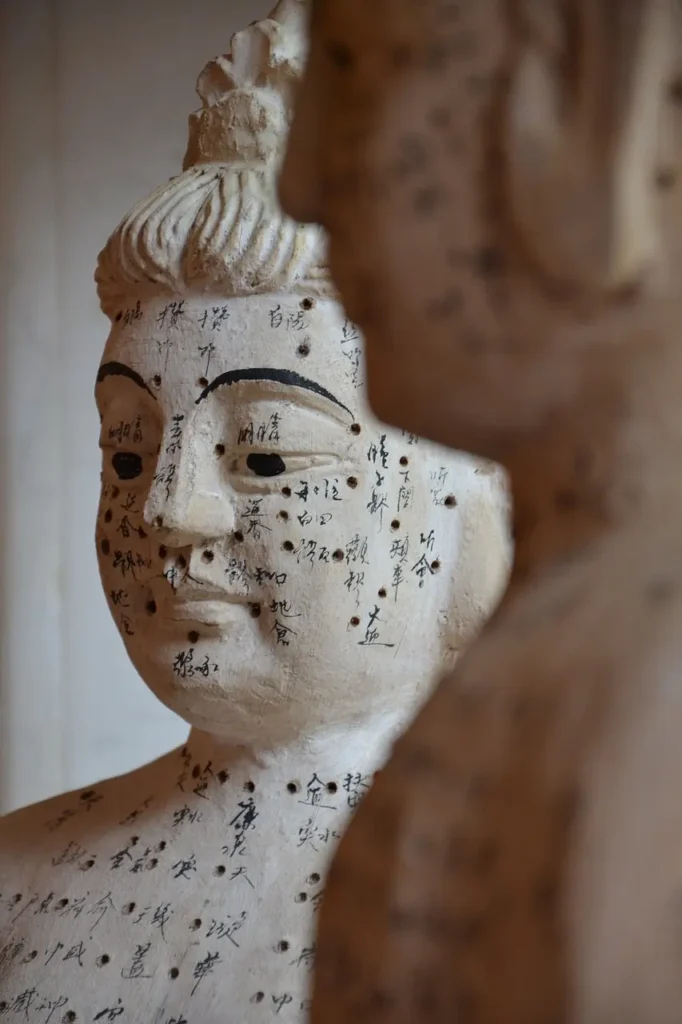
Meridians are the heart of wellness massage. They form an invisible but essential network, connecting organs, emotions and general well-being. What fascinates me is the precision with which these energy lines have been mapped: Each meridian corresponds to an organ, but also to an emotion or a bodily function.
For example, the liver meridian is often connected to the manage emotions such as anger. By working on these points we can relieve not only physical pain, but also emotional tension. It is this holistic vision that makes this massage so special.
The holistic approach to Japanese massage
Unlike a simple relaxing massage, this method takes into account your physical, emotional and energetic state. For this reason, before each session, I always find time to talk with you.
Did you sleep well? Are you feeling stressed or tired? Every detail counts to personalize the session and adapt the techniques used. CThe treatment then becomes a moment of refocusing, a return to oneself.
Contraindications of Japanese massage
Like any treatment, Japanese massage is not suitable for all situations. It is not recommended in cases of:
- fever or current infection,
- recent muscle injuries or fractures,
- severe circulatory disorders,
- risky pregnancy.
If you have any doubts, don’t hesitate to ask me questions. My goal is always to ensure your safety and comfort above all else.
What is a Japanese massage?
A Japanese massage is an internal journey. For about an hour I alternate fluid movements, gentle pressure and subtle stretches. These gestures aim to balance energy flows by releasing muscle tension.
This is not the classic oil massage, but a practice in which you work directly on the tissues and acupressure points. Each gesture has a precise intent: to regain balance, calm the mind and revitalize the body.
The benefits of Japanese massage
My customer feedback speaks for itself:
- More restful sleep,
- Better stress management,
- A reduction in muscle tension,
- A sensation of lightness, as if the body was rediscovering its natural energy.
But beyond these benefits, what seems most precious to me is this moment that you offer yourself. A break just for you, to breathe and reconnect with your essence.
What are the risks of Japanese massage?
Rest assured, the risks are rare. However, like any energy practice, it may happen that some people feel temporary fatigue after a session. It is simply a sign that the body is working to regain its balance.
And the side effects?
Side effects remain very limited. In rare cases, a slight pain or a sensation of heat may appear in the massaged areas. These reactions disappear quickly and demonstrate the effectiveness of the treatment. If you have any doubts, I’m always here to answer your questions.
The benefits and side effects of shiatsu
Shiatsu, one of the main Japanese massage techniques, is recognized for its many benefits. It helps to:
- relieve back pain,
- improve digestion,
- reduce migraines,
- strengthen the immune system.
However, just like Japanese massage, shiatsu requires some precautions. For example, it is important to report any pathology before starting a session.
What are the techniques of Japanese massage?
The swing
Imagine a gentle movement, as if you were cradling your body. This technique immediately calms the nervous system and invites you to completely let go.
Finger pressure
With my hands or fingers I apply targeted pressure on the energy points. These precise and controlled gestures stimulate blood circulation TO. For an auric massage you can find my article on Usui Reiki. Read the article
Elongation
Light stretching helps soften muscles and release accumulated tensions.
The rotation
Finally, circular movements, especially on the joints, helps release areas of tension and restore mobility
Latest Posts Published
Head massage: 5 unsuspected benefits
How to overcome anxiety and gain self-confidence
What does sophrology treat? | Discover its advantages and how it can help you?
Acupressure: Acupuncture without needles
Managing negative emotions in 6 steps

How to monitor your sleep quality: apps and devices
8 sophrology exercises to overcome stress
Foot reflexology in Castelginest: relaxation near Toulouse
Positive Attitude: 7 Key Steps to Reduce Stres